FAQ
Starting a Bike Bus is usually easier than people think — you don't need to have everything figured out on day one. Here are the questions we get most often, with practical answers.

What is a Bike Bus?
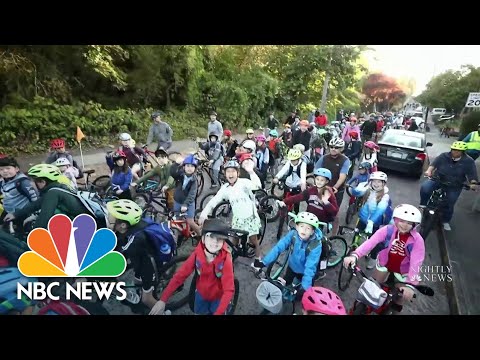
A Bike Bus is an organized group of children and families riding bikes to school together along a set route. It can serve one school or several, start from one meeting point or many, and include a few families or a lot. Every Bike Bus shares the same joy, community feel, and transformative energy.
 Video
Watch a Bike Bus in action
Video
Watch a Bike Bus in action
Who can start one?
Anyone connected to a school — parents and guardians, teachers, school staff and administrators, even students.
How many riders?
There's no minimum. One kid and a couple of adults counts, and it often grows from there.
How far?
Most routes are 0.5–3 miles. If your riders are happy to ride the whole way, it works.
Why Bike Bus?
A Bike Bus gets kids to school in a fun, social, and healthy way, brings neighbors together, and makes a real difference for your community and the planet.
- Health and wellbeing: riding to school improves the health of the kids and families who take part.
- Ready to learn: kids who ride arrive more engaged and better prepared to take in new information.
- Community: families feel more connected to their friends, fellow school families, and neighborhood.
- Less car traffic: every family on bikes is one less car in the drop-off line.
- Cleaner, quieter streets: fewer car trips mean less noise and air pollution.
- Climate action: fewer car trips cut emissions in your community.
- Safer roads: fewer car trips and more bike trips make streets safer for everyone.
Frequently Asked Questions
What route should I use?
Start simple. Residential streets with lower car traffic are often a great fit, and most routes run 0.5–3 miles. The "best" route is the one people will actually ride consistently. More route-planning tips.
Does my Bike Bus need to be limited to a single school?
No — a Bike Bus can include children and families from multiple schools if that fits your community.
What if my route doesn't include the entire school? Should I still do it?
Yes. A Bike Bus doesn't have to cover the whole school to make an impact. Even a short route with a few families can build momentum, show what's possible, and inspire others to join or start their own routes.
Should the Bike Bus run after school, too?
Most Bike Buses only run in the morning because afternoon schedules vary significantly due to sports and after-school programs. Families and kids typically self-organize or handle the return trip individually. This can be a great way to promote more independence and help kids transition beyond the Bike Bus with their riding.
We typically advise Bike Bus leaders to do what makes sense for them. Definitely don't feel obligated, but if it's something you want to try, that's totally up to you!
How many adults are needed for a Bike Bus?
Two adults (one in front, one in back) is a common setup, but some Bike Buses run with one adult. Generally, more adults makes everything easier — safety, communication, and confidence.
How safe is a Bike Bus? What precautions should we take?
Very safe. Across hundreds of Bike Buses around the world over several years, we've heard of only one injury, and zero crashes involving a car. You know your community best — choose what makes your group feel safe and comfortable.
Practical basics: pick a calm route, keep a consistent start time, set simple riding rules, and place adult leaders at the front and back so the group stays together. Some groups also add safety vests.
What about liability?
A Bike Bus is simply a group of neighbors and families choosing to ride to school together. Because it's an opt-in, community-led activity, we compare it to parents organizing a carpool — schools and organizers aren't held liable for families traveling together on public streets.